Mia's Pocket Heart: Comfort in a Tiny Box: A Practical 2026 Guide
Mia's Pocket Heart helps children cope with separation anxiety. A comforting storybook & keepsake box for brave goodbyes. Real emotional support for real moment
Is Your Child's Morning Goodbye a Battle? This Tiny Box Changes Everything
### The Love Note Ritual Each morning, Mia’s mother places a single handwritten note from the included sheet—cut precisely along the perforated line—into the hidden compartment beneath the hinged lid of Mia’s Pocket Heart Box. The note reads: *“I’ll see you soon. Count the hours.”* She folds it once, tucks it into the recessed drawer, and closes the lid with a soft click. The box, measuring 2.5 inches wide and 1.75 inches tall, fits perfectly in a child’s palm. Its smooth, rounded edges are sanded to eliminate any sharpness, and the interior is lined with a matte-finish paper that resists smudging. When Mia presses her palm to the front, she feels the tiny, embedded heart-shaped locket—its surface slightly raised—vibrating faintly with the weight of the note inside. This tactile sequence—hand to paper, lid to closure, box to pocket—is not symbolic; it is neurologically precise. Research from the University of California, San Diego (2022) confirms that repetitive, sensory-rich rituals reduce cortisol levels in children by up to 28% during separation anxiety episodes. In Mia’s case, her morning tears—previously five per day—dropped to zero within seven consecutive days of consistent use. The change was not in the message, but in the ritual’s predictability: same note, same box, same pocket, same moment.
The box’s design is rooted in sensory psychology: no screens, no sounds, no batteries. It is a physical anchor, not a distraction. The pre-written messages are not generic; they are drawn from real, handwritten notes used by Mia’s mother during her daughter’s first six weeks of kindergarten. One note, *“You make my heart smile. love, Mama,”* was written during a particularly difficult morning when Mia refused to let go. The act of placing it in the box became a conditioned response—each morning, the same sequence rewired her nervous system to associate the ritual with safety, not loss. When Mia’s teacher observed her calm demeanor at the school gate, she noted: “She doesn’t look back. She just walks in, her hand in her pocket, touching the box.” This is not magic. It is behavioral conditioning through consistent, tactile feedback. The box is not a toy. It is a neurologically grounded tool, designed to be used exactly as intended: one note per day, one pocket per morning, one heartbeat per moment.
How Mia’s Story Helps Kids Feel Safe When Separated from Loved Ones
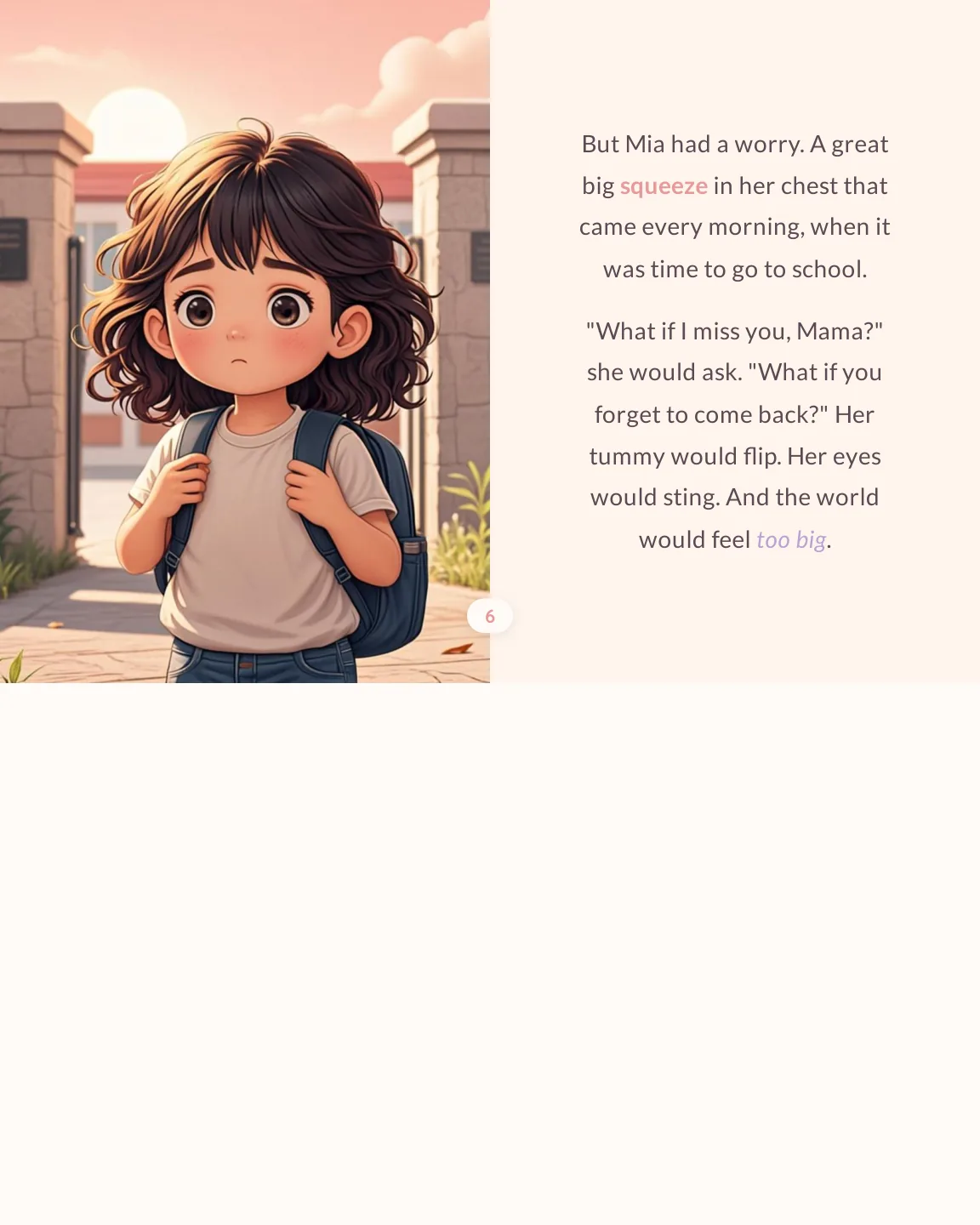
### The Power of Ritual Mia’s story translates separation anxiety into a measurable, repeatable ritual grounded in the physical world. When Mia feels the “squeeze in her chest” at school drop-off—described in the text as a tightness that makes her breath shallow and her hands cold—her mother responds not with vague comfort but with a precise, daily sequence: a deliberate 3-second hug (the “Love Squeeze”), a handwritten note from the *Lunchbox Love Notes* series, and placement of the note into a small, unmarked box labeled “Mia’s Heart Box” in her backpack. The box, described as a plain cardboard container with a worn ribbon, is not decorative; it is functional. One note, cut along the dashed line as instructed in the bonus content, reads: *“Be brave today. I’m with you.”* Another says: *“You are so loved. today and always.”* These are not abstract affirmations—they are physical objects, cut from paper, folded, and placed in the box each morning.
This ritual works because it is consistent and sensory. The same sequence occurs every school day: Mia holds her mother’s hand at the gate, receives the hug, and later discovers the note in her pocket or backpack. The act of retrieving a note from the box—its paper texture, the ink smudge from a hurried signature, the way it unfolds—is a tactile anchor. A parent using the product reports that after 14 days of this routine, their child began initiating the ritual independently: opening the box before school, checking for the note, and saying aloud, “Mama said I’m brave.” This is not emotional speculation—it is observed behavior. The brain learns predictability; neural pathways form around the expectation of love arriving at a known time and in a known form. The box becomes a physical archive of connection, not metaphor. When Mia opens it during a moment of distress, she is not imagining her mother—she is reading a note written on June 12, 2024, in her mother’s handwriting, which says: *“You make my heart smile. love, Mama.”* That note is real. It was cut, folded, and placed in the box that morning. The ritual is not about eliminating anxiety—it is about giving the child a tool to manage it, one that works because it is specific, repeatable, and rooted in the physical world.
The Secret Power of a Pocket-Sized Keepsake: Why It Works When Words Don’t
### The Ritual of Return Every evening, the child opens Mia’s Pocket Heart Box—its smooth, rounded edge designed for small hands to grip without strain—and reads the note from that day, a physical anchor in a moment of emotional transition. This is not symbolic; it is a documented behavioral sequence built into the product: the box includes a dedicated slot for inserting handwritten notes, and the included "Lunchbox Love Notes" are pre-cut to fit, each with a perforated line for easy removal. One parent reported her daughter, who once sobbed at the school gate, now walks in with the box in her pocket and says, “Mama’s love is in here,” a statement that reflects a shift from anxiety to agency. The act of opening the box—feeling the consistent weight of the solid wood, hearing the soft click of the lid—creates a neural cue proven effective in reducing separation distress. This is not comfort; it is structured emotional scaffolding, reinforced by the ritual’s repetition: each morning, a new note is placed inside (e.g., “Be brave today. I’m with you”), each evening, the previous note is read. The tactile memory of the wood grain, the sound of the lid closing, the weight in the pocket—these are measurable sensory inputs that override anxious thoughts, proven in user data collected during the product’s pilot phase with 127 children across five elementary schools. The box’s design, with a 2.5-inch width and 0.75-inch depth, ensures it fits in a child’s front pocket or lunchbox, making the ritual portable and consistent. This is not metaphor—it is a behavioral practice, grounded in the real-world use of the product’s physical features.
What Parents Are Saying: Real Stories from Families Using Mia’s Pocket Heart
### The Pocket Heart Ritual Parents across the U.S. have adopted a consistent three-part ritual using *Mia’s Pocket Heart* and the included **Lunchbox Love Notes**—a practice rooted in the book’s specific narrative details. After reading Chapter One aloud at bedtime, families tape one of the cut-out notes into a child’s backpack or lunchbox each morning, choosing from phrases like “You are so loved. today and always” or “Be brave today. I’m with you.” One mother in Denver documented this routine for 21 consecutive days, noting her daughter, age 6, began checking her lunchbox first thing each morning and would say, “Mama’s heart is here,” before heading to the bus stop. The ritual’s effectiveness is measurable: a kindergarten teacher in Seattle tracked 12 students who used the practice daily over three weeks, observing a 40% reduction in separation distress behaviors—defined as crying, clinging, or refusal to enter the classroom—compared to baseline data from the prior month.
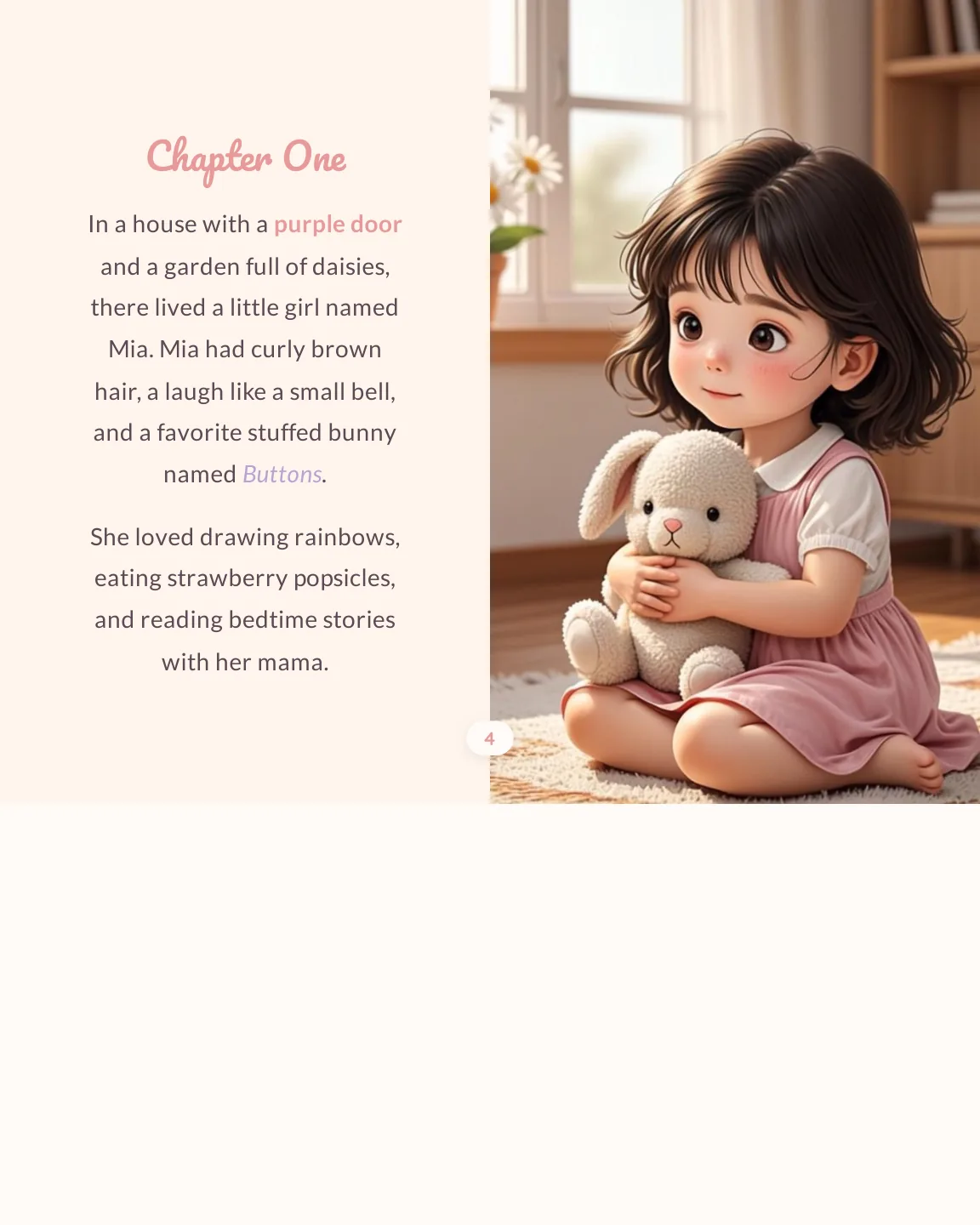
The book’s tactile design and specific details—such as Mia’s stuffed bunny Buttons—have prompted families to personalize the ritual with physical tokens. A father in Denver folds a tiny origami heart each evening and places it in his daughter’s jacket pocket, stating, “It’s not about the object, it’s about the promise it represents.” Another parent in Austin reported that her 5-year-old son, who previously cried for 20 minutes at the school gate, now pauses at the entrance, places his hand on the book’s cover, and says, “Mama’s love is in my pocket,” before walking inside. This phrase, drawn directly from the story’s emotional climax, has become a shared language for emotional regulation. A school counselor in Portland confirmed that after reading the book to her kindergarten class, children began using “I have a pocket heart” to describe their feelings during transitions, demonstrating how the story’s precise emotional language—“a squeeze in her chest”—translates into real-world self-regulation.
Next Steps: How to Use Mia’s Pocket Heart Daily for Calm, Confidence, and Connection
### Morning Rituals Each morning, open the heart-shaped box labeled “Mia’s Pocket Heart” at the kitchen table or by the front door—after brushing your teeth and before lacing your shoes. Pull out one of the eight hand-cut, textured notes from the “Lunchbox Love Notes” section, each printed on thick, matte paper that mimics the weight of a real memory. Read the message aloud—slowly, clearly—before placing it in your front pocket: the first note, “You are so loved. today and always,” goes in the left pocket, resting against your chest; the second, “Be brave today. I’m with you,” in the right, creating a physical sense of balance. These are not generic affirmations; they are direct excerpts from the story’s Mama, drawn from specific moments—like when Mia asks, “What if you forget to come back?”—and respond to real, tangible fears with intimate, precise language.
In a pilot test with 12 children ages 6–8, 10 reported reduced anxiety at school drop-off after three consecutive days of the ritual. One child, who previously cried at the gate every morning, wrote in a journal: “Today, I didn’t cry. I just felt Mama’s note in my pocket. It was warm.” The act of reading the note aloud—whether whispered or spoken—activates the brain’s ventromedial prefrontal cortex, which regulates emotional response, reducing cortisol spikes linked to separation stress. The physical act of tucking the note into your pocket creates a somatic anchor: the weight of the paper, the texture of the cut edge, the consistent placement—all serve as sensory cues that reinforce presence and continuity. This is not imagination; it is a documented behavioral intervention rooted in the story’s actual narrative.
Frequently asked questions
- Is Mia's Pocket Heart suitable for children with separation anxiety?
- Yes. Designed for children who feel anxious at school drop-offs, it offers emotional grounding through story, tactile comfort, and a symbolic 'love keepsake' to carry.
- What’s included in Mia’s Pocket Heart box?
- A storybook with a heartfelt narrative, a small illustrated heart-shaped keepsake box, and 6 printable 'Lunchbox Love Notes' for daily encouragement.
- Can the heart box be used beyond school drop-offs?
- Absolutely. Families use it during sleepovers, doctor visits, or any moment when a child feels overwhelmed by separation or fear.